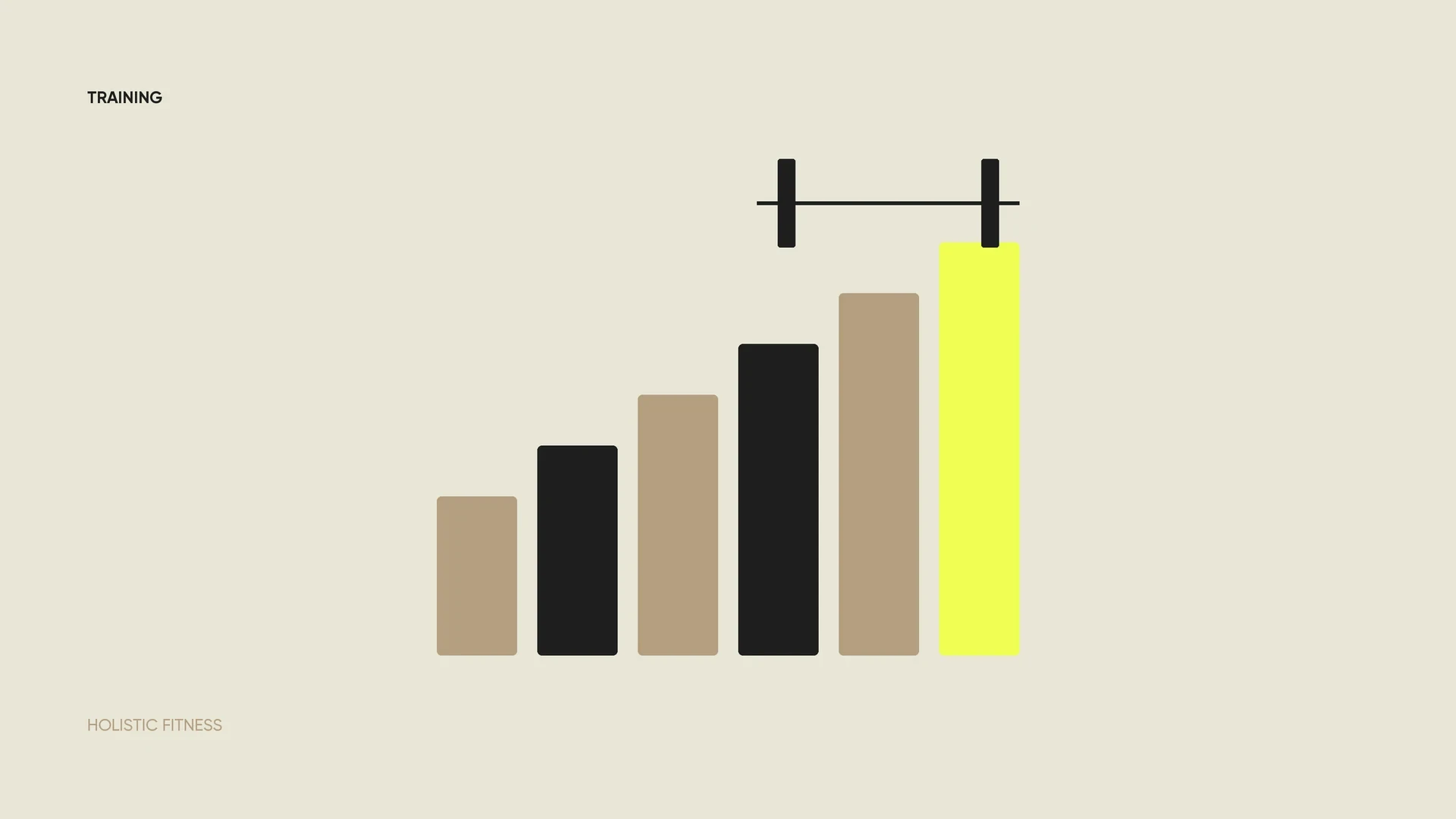
Your body is incredibly good at adapting. Give it a new challenge and it becomes stronger, fitter and more resilient. But once it has adapted, the same challenge no longer creates change. That is why doing the same workout for months eventually stops working.
Progressive overload means gradually increasing the demand on your body so it keeps adapting.
It is not only about adding weight
Adding load is one option, but there are many ways to make a session slightly harder:
- More reps with the same weight
- More sets or more total work across the week
- Slower tempo, for example a three-second lowering phase
- Shorter rest between sets
- Greater range of motion, such as a deeper squat or a deficit push-up
- Harder variations, moving from two legs to one leg, or from stable to less stable
Small steps win
Progress should be small enough that your technique stays clean. Adding one rep per set each week, or a small amount of weight once you hit the top of your rep range, is plenty. Big jumps usually lead to sloppy movement or injury.
A simple method: double progression
Choose a rep range, for example 8 to 12. Start with a weight you can lift for 8 good reps. Each session, try to add a rep. When you can complete all sets at 12 reps with good form, increase the weight slightly and start again at 8.
Respect recovery
Overload only works if you recover from it. Sleep, nutrition and lighter weeks every so often allow your body to absorb the work. Progress is not a straight line; some weeks you will simply consolidate.
Write your sessions down. What gets tracked gets improved, and you will be surprised how far small steps take you over a year.